
The music was there. The visibility wasn't.
When Jamie Kunselman stepped into the music director role at Dover Congregational UCC, he inherited a music library built over decades, but no catalog showing what was actually in it.
Scores lived in filing boxes, cabinets, loose folders, and stacks. Some were mislabeled, duplicated, or separated from the rest of their sets. Finding repertoire often meant opening boxes and playing through whatever happened to be inside.
The collection had value. What Dover lacked was a reliable way to see it, search it, and build on what was already there.
Turning a collection into a library
Cataloging Dover's music meant more than typing titles into a database.
Jamie reviewed the collection piece by piece, deciding what should stay in active use, what could be donated, and what no longer needed to occupy shelf space. That physical cleanup represented the majority of the work.
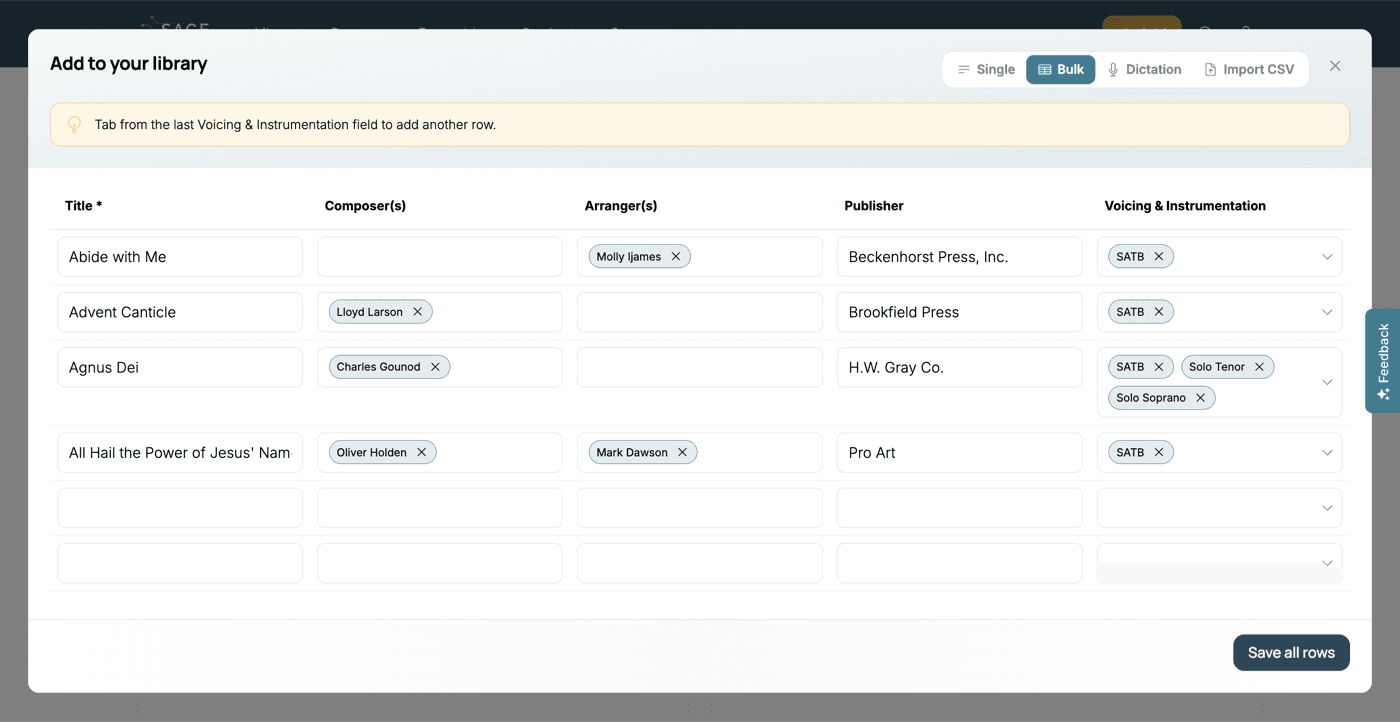
As the collection took shape, each active piece was added to Sage Score. Core catalog information was entered by hand, while Sage enriched the records with additional musical context such as genre, tags, tempo, energy, intensity, and valence.
For a library that had never had a digital catalog, the change was substantial: Dover went from having almost no structured information about its collection to having a searchable, richly described record for every active Chancel Choir piece.
Once the catalog understood the music, the shelves didn't have to.
Before Sage, Dover's physical organization carried some of the meaning of the collection. Christmas music lived together. Easter music lived together. General repertoire lived somewhere else.
But a piece can belong to more than one season, service, or theme.
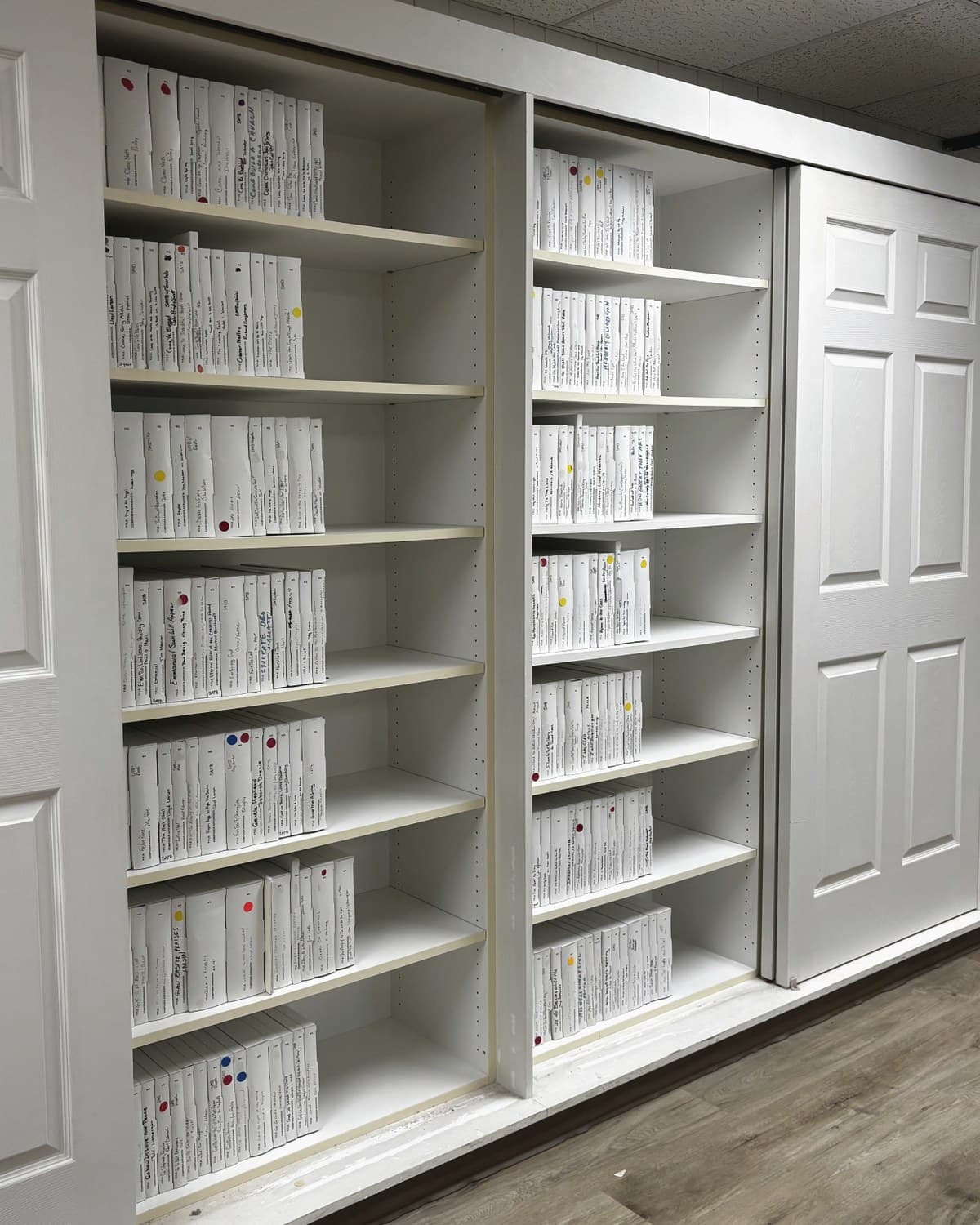
Once that context became searchable in Sage, Dover could simplify the physical library itself. The Chancel Choir collection was reorganized alphabetically by title, then composer, creating a cleaner system that can grow without depending on liturgical categories.
Sage Storage now tracks the physical collection behind the catalog. Jamie can see what lives on each shelf, how much space remains, and exactly where a new or returned piece belongs.
Because available capacity is distributed across the library, Dover can continue adding music without repeatedly shifting the entire collection to make room.
42
Mapped shelves
6 stacks · 7 shelves each
105 ft
Tracked shelf space
1,260 inches total
A–Z
Built to scale
Alphabetical by title, then composer
639 pieces. One knowable collection.
Once Dover's music was cataloged, the library became useful in an entirely new way.
Jamie can search across the collection by familiar details like title, composer, arranger, publisher, and voicing, but also by richer musical context such as genre, parent work, learning objectives, tags, and other descriptive metadata.
Each record also connects the digital catalog back to the physical library, showing where the piece is stored, whether it is available, and how it has been used over time.
Instead of relying on memory or opening boxes to discover what Dover owns, Jamie can explore the collection from anywhere and narrow hundreds of pieces to the repertoire that fits the musical need in front of him.
“The program planning feature has been the biggest time saver. What used to take hours of combing through pieces, determining themes, and comparing to the lectionary now takes minutes.”
From hours of matching to minutes of review
Before Sage, planning a liturgical season meant working date by date: reviewing readings and themes, considering repertoire Jamie already knew, and trying to match pieces to the right Sundays.
For the 2026–27 season, Dover approached that process differently.
Jamie entered the Chancel Choir's service dates and 26 pieces he already wanted to prioritize. Sage brought together the Revised Common Lectionary, liturgical occasions, Dover's repertoire metadata, performance history, and Jamie's own programming direction.
The result was 40 proposed programs ready for review.
Sage does not replace the director's artistic or liturgical judgment. It gives Jamie a clearer view of the collection so he can spend less time searching for possibilities and more time deciding what belongs in the program.
Set dates & priorities
Jamie defines the season, repertoire priorities, and programming direction.
Surface strong matches
Sage connects liturgical context with the musical knowledge already in Dover's library.
Review + decide
Jamie evaluates the suggestions and makes the artistic and liturgical decisions for each service.
One library, from planning through rehearsal
Dover's library now supports more than finding and programming music.
Jamie conducts from an iPad, so digital scores can live alongside the corresponding repertoire records in Sage. He also creates practice tracks for individual voice parts, giving singers another way to prepare between rehearsals.
Those resources were previously shared through Google Drive, where permissions and access could create unnecessary friction. Through Sage's Member Hub, scores and rehearsal materials can instead stay connected to the music, program, and ensemble they belong to.
For the 2026–27 season, Dover expects to make more than 200 digital scores and practice resources available through that connected workflow.
Digital scores
Conducting and reference materials stay connected to the repertoire record.
Member Hub
Scores and rehearsal resources live in one place for the ensemble to access.
Preserving more than the scores
A music library holds more than repertoire. It holds years of programming decisions, performance history, physical organization, and institutional memory.
Before Sage, much of that knowledge at Dover lived with the people who had been there long enough to remember it. Now, the catalog preserves that context alongside the collection itself.
A future director can inherit more than shelves of music. They can inherit a searchable library, performance history, physical locations, digital resources, and a clearer picture of how the collection has been used over time.
The collection was always valuable. Sage made that value easier to see, understand, and put to work.
What could Sage uncover in your library?
Bring an existing catalog or start fresh. Sage helps turn the music you own into a library you can search, understand, and put to work.